
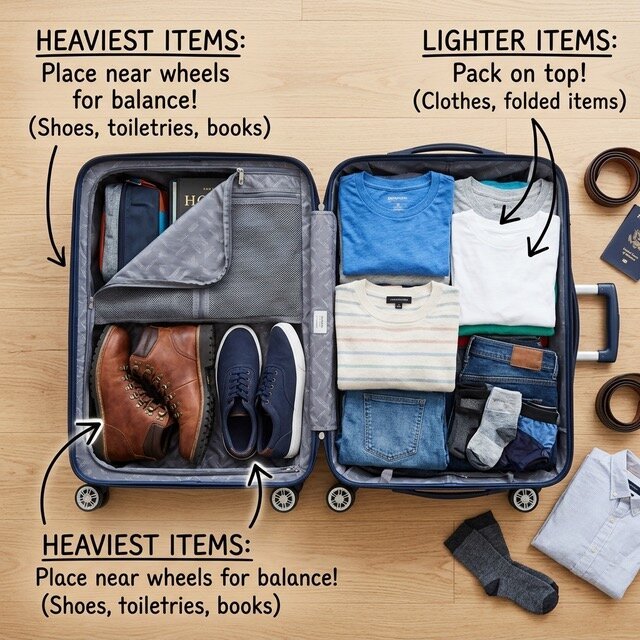
Direct Answer: Efficient travel packing is an exercise in constraint rather than compromise. The most effective packing strategy relies on a modular system: choosing high-performance odor-resistant fabrics like merino wool and technical polyester, compartmentalizing garments in ultralight compression cubes, and maintaining strict weight discipline before heading to the airport. By adhering to 20 proven packing rules organized across four key phases, you can travel indefinitely out of a single carry-on bag without paying checked baggage fees or sacrificing wardrobe versatility.
The Core Rules of Modern Packing
- Modular Compression: Use structured compression cubes for soft knits, but flat-fold collared shirts and linen trousers.
- The Rule of Three: Pack one set of clothes to wear, one clean set in reserve, and one set washing or drying.
- Weight Discipline: Weigh your packed bag at home using a digital luggage scale to stay strictly within airline carry-on limits (typically 7 kg to 10 kg internationally).
- Zero Redundancy: Never pack “just-in-case” items that can be purchased locally for under $10 in under 10 minutes.
Phase 1: Luggage Architecture & Fabric Selection (Tips 1–5)
1. Match Your Luggage to Your Transit Reality
Before packing a single item, choose a suitcase or travel backpack tailored to how you will actually move. If your itinerary involves smooth airport terminals, modern hotels, and taxi rides, a quality 4-wheel spinner suitcase like those featured in our best carry-on luggage guide offers the easiest mobility. However, if your journey requires navigating historic cobblestones, train station stairs, or public transit, a 35L to 40L travel backpack distributes weight ergonomically and keeps your hands free.
2. Implement the “Rule of Three” Wardrobe Framework
The single greatest cause of overpacking is packing a separate outfit for every day of travel. Adopt the Rule of Three: wear one outfit, pack one clean outfit, and have one outfit washing or drying. By choosing neutral, interchangeable color palettes (navy, grey, black, olive, white), three tops and two bottoms yield multiple distinct outfit combinations while occupying less than a third of your bag’s volume.
3. Prioritize Merino Wool and Technical Synthetic Blends
Fabric composition determines your packing efficiency. Standard heavy cotton absorbs sweat, traps odors, wrinkles easily, and takes up to 24 hours to air dry in a hotel bathroom. In contrast, lightweight merino wool (150–200 gsm) naturally resists microbial odor buildup, regulates body temperature across varying climates, and can be worn multiple times between washes. Pair merino tops with quick-drying synthetic stretch trousers that shed light precipitation.
4. Build a Dedicated, Pre-Packed Dopp Kit
Avoid packing toiletries from your bathroom counter on the morning of departure. Maintain a dedicated, pre-packed toiletry kit using reusable 3 oz (100 ml) silicone bottles that strictly comply with the TSA 3-1-1 liquids rule. Opt for solid alternatives wherever possible: solid shampoo bars, mineral sunscreen sticks, and solid deodorant eliminate liquid volume and remove any risk of cabin-pressure leaks.
5. Conduct a Pre-Trip Floor Staging Audit
Lay every piece of clothing, accessory, and electronic device flat on your floor 48 hours before departure. Inspect the collection objectively and remove one-third of the items—specifically anything tagged as “just in case.” If you find yourself packing specialized apparel for a single hypothetical scenario, leave it behind.
Phase 2: Modular Compression & Organization (Tips 6–10)
6. Use Compression Packing Cubes by Clothing Category
Loose clothing inevitably settles into dead space at the bottom of your bag, shifting during transit and creating packing chaos. High-density compression packing cubes made from ripstop nylon use a secondary perimeter zipper to purge excess trapped air without creasing garments. As detailed in our review of the best packing cubes and organizers, assigning one medium cube for tops, one small cube for underwear and socks, and one cube for bottoms allows instant access without disrupting your entire suitcase.
7. Dedicate a Compression Sack for Bulky Outerwear
Puffer jackets, fleece mid-layers, and down vests contain significant loft that consumes valuable packing space. Stow these items inside a dedicated dry compression sack and cinch the straps down. When you arrive at your destination, unpacking the garment restores its natural loft within minutes.
8. Encase Footwear in Washable Shoe Bags
Never let shoe outsoles come into direct contact with clean clothing. Outdoor grime, street dust, and airport debris transfer easily to fabric. Slip extra shoes into lightweight, washable ripstop shoe bags or reusable shower caps. Position shoes heel-to-toe along the bottom perimeter of your suitcase or against the backpack frame sheet to optimize center of gravity.
9. Separate Clean and Dirty Garments with an Ultralight Dry Sack
Do not rely on thin hotel plastic laundry bags, which tear easily and trap humid odors. Carry an ultralight roll-top dry sack (8L to 13L) specifically for worn garments. The roll-top seal locks in odors and moisture, ensuring your clean wardrobe stays fresh throughout multi-week itineraries.
10. Maximize Dead Space Inside Shoes and Cavities
Every packed pair of shoes contains usable hollow interior volume. Stuff your packed shoes with rolled socks, charging cables, or travel adapters. This protects the shoe’s toe box from collapsing under external pressure while reclaiming volume that would otherwise be wasted.
Phase 3: Rolling, Folding & Garment Care (Tips 11–15)
11. Roll Synthetic Knits and Performance Wear
Rolling is ideal for t-shirts, synthetic athletic apparel, casual shorts, and base layers. Tight cylinders maximize space efficiency in packing cubes and prevent deep fabric creases. Smooth the garment flat with your hands before rolling from the bottom hem to the collar to prevent bunching.
12. Flat-Fold Collared Shirts and Tailored Trousers
Do not roll dress shirts, blazers, or tailored linen trousers. Rolling creates spiral pressure creases across collars, plackets, and lapels that require time-consuming hotel ironing. Instead, use a structured garment folder with folding boards. Flat folding maintains crisp fabric lines and allows tailored clothing to sit neatly at the top of your suitcase.
13. Bundle Wrap Delicate Items Around a Soft Core
For delicate fabrics that crease easily, use bundle wrapping. Wrap your most wrinkle-prone garments around a central soft core—such as a packing cube filled with sweaters or knitwear. By bending garments gently around a curved core rather than making sharp 90-degree folds, you minimize fabric tension points and reduce arrival creasing.
14. Protect Electronics with Soft Clothing Cushioning
If you travel with cameras, lenses, or external hard drives, you do not always need heavy, rigid padded cases that add excess bulk. Wrap sensitive gear securely in thick merino wool sweaters or mid-layer fleeces, placing them in the center of your bag where they are insulated from exterior perimeter impacts.
15. Pad and Seal All Liquids in Leakproof Pouches
Airplane cargo holds and overhead bins undergo continuous barometric pressure shifts that cause unsealed bottles to expand and leak. Before capping liquid bottles, squeeze out excess air to create a slight internal vacuum. Place all bottles inside a durable clear TPU zipper pouch with heat-sealed seams rather than standard flimsy sandwich baggies.
Phase 4: In-Transit Discipline, Weight & Security (Tips 16–20)
16. Wear Your Bulkiest Layers on Transit Days
Heavy boots, thick denim, and winter jackets consume disproportionate luggage volume and weight. Always wear your heaviest pair of shoes and your bulkiest outerwear during flights and train transfers. Once aboard the aircraft, jackets can be removed and stowed in the overhead bin or used as in-flight lumbar support.
17. Keep Medication and Critical Tech in Your Personal Item
Even when traveling carry-on only, gate agents on fully booked regional flights may occasionally force you to gate-check your primary roller suitcase. Never pack prescription medications, passport, keys, power banks, or laptops in a bag that could be gate-checked. These items belong exclusively in your underseat personal item bag.
18. Weigh Your Bag with a Digital Scale Before Leaving
Budget airlines in Europe, Asia, and Australia strictly enforce carry-on weight limits, frequently weighing bags at check-in desks and boarding gates. Carry a compact digital luggage scale (which weighs under 3 oz) and check your packed bag before leaving home. Knowing your bag weighs precisely 6.8 kg removes the stress of unexpected airport repacking or baggage penalty fees.
19. Photograph Your Packed Bag and Carry Digital Backups
Before closing your luggage, take a quick smartphone photo of your open, packed bag as well as its exterior. If your bag is ever delayed or misplaced by transit authorities, having immediate visual proof of the bag’s exterior and its inventory streamlines airline compensation claims and customs declarations.
20. Leave 15% to 20% Buffer Capacity
Never pack your luggage to 100% capacity before your outbound flight. Overpacked bags place severe mechanical strain on zipper coils and make in-hotel repacking frustrating. Leaving a 15% to 20% volume buffer accommodates souvenir purchases, duty-free items, and natural mid-trip packing expansion without forcing you to buy an extra bag.
Packing Method Comparison: Which Technique to Use When
| Packing Method | Best Garment Types | Space Efficiency | Wrinkle Protection |
|---|---|---|---|
| Rolling (Ranger / Military Roll) | T-shirts, base layers, athletic wear, casual shorts | Very High (eliminates air pockets) | Moderate (ideal for synthetics; creases crisp cotton) |
| Flat Folding (Folder Board) | Button-down shirts, blazers, dress slacks, linen items | Moderate (preserves structured footprint) | High (preserves collars, seams, and crisp press) |
| Compression Cubes | Socks, underwear, sweaters, mid-layer fleeces | Maximum (mechanical compression zipper) | Moderate (best for knitwear and casual apparel) |
| Bundle Wrapping | Delicate dresses, silk garments, tailored suits | Moderate (requires central soft core) | Maximum (zero sharp creases or folding lines) |
Frequently Asked Questions
Is it better to roll or fold clothes in a suitcase?
Neither method should be used exclusively. The optimal approach is hybrid: roll soft, synthetic, and knit garments (t-shirts, gym shorts, socks, base layers) to minimize volume, and flat-fold structured items (collared dress shirts, tailored trousers, blazers) using packing folders to prevent severe collar and placket creasing.
How many clothes should I pack for a two-week trip?
Pack for five to seven days regardless of your trip’s total duration. By utilizing quick-drying fabrics (merino wool, technical synthetics) and planning one mid-trip laundry cycle—either using hotel sink detergent sheets or a local laundromat—you can travel for two weeks or two months with the exact same carry-on inventory.
What shoes should I pack for extended walking and travel?
Limit your packing to two pairs total: wear one pair of supportive, cushioned travel walking shoes on transit days (see our curated guide to the best travel shoes for walking all day) and pack one versatile secondary pair (such as a smart-casual leather sneaker, water-resistant boot, or recovery sandal) in your luggage.